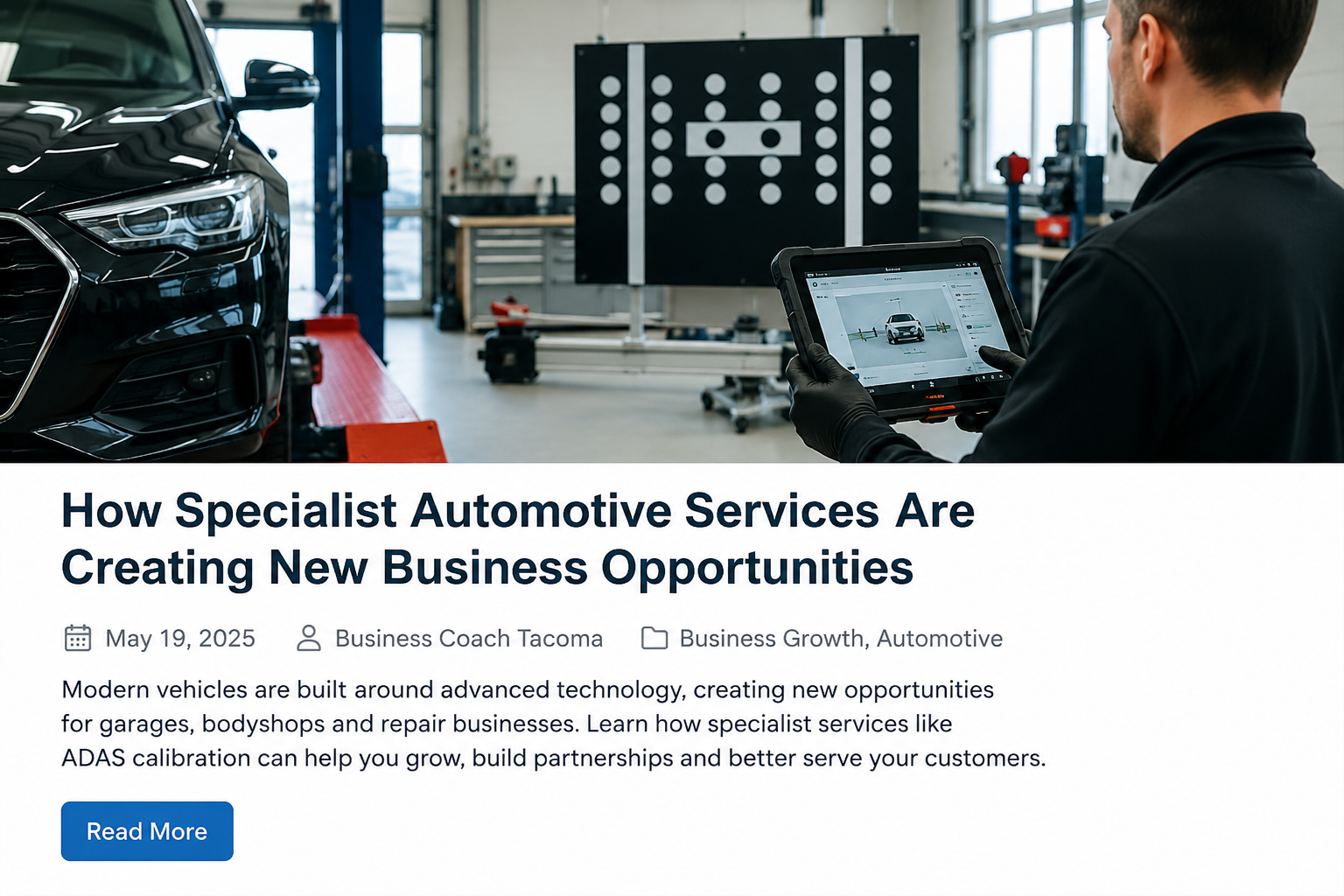
The automotive industry has changed dramatically over the last decade. Garages and repair businesses are no longer dealing only with mechanical faults, routine servicing and visible body damage. Modern vehicles are now built around advanced technology, sensors, cameras, software and safety systems that require specialist knowledge.
This shift is creating new opportunities for businesses that can adapt. Whether it is diagnostics, programming, electric vehicle support or driver assistance system calibration, specialist automotive services are becoming increasingly important.
Technology Has Changed Vehicle Repair
Many modern vehicles are fitted with advanced driver assistance systems, often known as ADAS. These systems can include lane assist, adaptive cruise control, autonomous emergency braking, blind spot monitoring, traffic sign recognition and parking assistance.
While these features are designed to improve safety and driver awareness, they also make vehicle repair more complex. A simple windscreen replacement, bumper repair, accident repair or sensor replacement may now affect systems that rely on precise alignment and calibration.
This has created a growing need for businesses that understand how to handle technology-led vehicle repairs.
Why Specialisation Matters
For many garages and bodyshops, trying to handle every part of a modern vehicle repair in-house is not always practical. Specialist equipment can be expensive, training takes time, and calibration procedures can vary between vehicle makes and models.
Instead, many repair businesses are finding value in building partnerships with specialist providers. This allows them to offer a more complete service to their customers without needing to invest immediately in every piece of equipment or every technical capability.
Specialist services can help with areas such as:
- ADAS calibration
- vehicle diagnostics
- radar and camera calibration
- module programming
- post-accident system checks
- windscreen camera calibration
- electric and hybrid vehicle support
This type of collaboration can help smaller businesses remain competitive while still meeting modern repair requirements.
A Better Customer Experience
Customers often do not understand the technical detail behind modern vehicle systems. They may simply know that their windscreen has been replaced, their vehicle has been repaired after an accident, or a warning light has appeared on the dashboard.
If a garage or repair business can explain the next step clearly, it builds trust.
For example, a customer may not know whether ADAS calibration is needed after a repair. A business that can guide them, arrange support and help avoid delays is offering more than a basic repair service. It is offering reassurance and convenience.
That can make a real difference in customer retention and word-of-mouth referrals.
New Revenue Opportunities for Garages and Bodyshops
Technology-led services can also create new revenue streams. Even when a business does not carry out the specialist work itself, it may still benefit from being able to manage the process for the customer.
For example, a bodyshop repairing a vehicle after a collision may need to arrange post-repair calibration before the vehicle is returned. A garage dealing with suspension work or wheel alignment may need to consider whether camera or radar systems have been affected. A windscreen company may need to arrange camera calibration after replacing glass on a vehicle with driver assistance features.
In each case, there is an opportunity to provide a more complete service.
Businesses that build reliable routes for specialist support can position themselves as more capable, modern and customer-focused.
The Role of ADAS Calibration
ADAS calibration is one of the clearest examples of how vehicle technology is changing the repair industry. Cameras and radar sensors must be correctly aligned for safety systems to work as intended. If they are disturbed by repair work, replacement glass or sensor issues, calibration may be required.
This is why services such as ADAS calibration support for garages and bodyshops are becoming increasingly important. Businesses can use services like ADAS Connect to help request quotes and arrange suitable calibration support for customer vehicles.
Building Partnerships Instead of Doing Everything Alone
One of the smartest business strategies in a changing market is knowing when to partner. Not every garage needs to become a full specialist calibration centre overnight. Not every bodyshop needs to buy every tool immediately. But every modern repair business should understand when specialist support may be needed.
Partnerships can help businesses:
- offer wider services
- avoid turning work away
- reduce delays
- improve customer confidence
- stay competitive as vehicles become more advanced
This approach allows businesses to grow gradually while still meeting customer expectations.
Preparing for the Future of Vehicle Repair
Vehicle technology will only continue to develop. More vehicles will rely on sensors, cameras, software and automated safety features. This means repair businesses need to think beyond traditional mechanical and bodywork skills.
The businesses that adapt early will be better placed to serve modern customers. They will also be more likely to win work from customers, insurers, fleet operators and trade partners who expect a complete repair process.
Specialist automotive services are not just a technical add-on. They are becoming a core part of how the repair industry operates.
Final Thoughts
The rise of specialist automotive services shows how business opportunities often appear when technology changes customer needs. Garages, bodyshops and repair centres that recognise this shift can build stronger services, better partnerships and new revenue streams.
ADAS calibration is just one example, but it highlights a much wider trend: the future of vehicle repair belongs to businesses that understand both the mechanical and technological sides of modern cars.


